

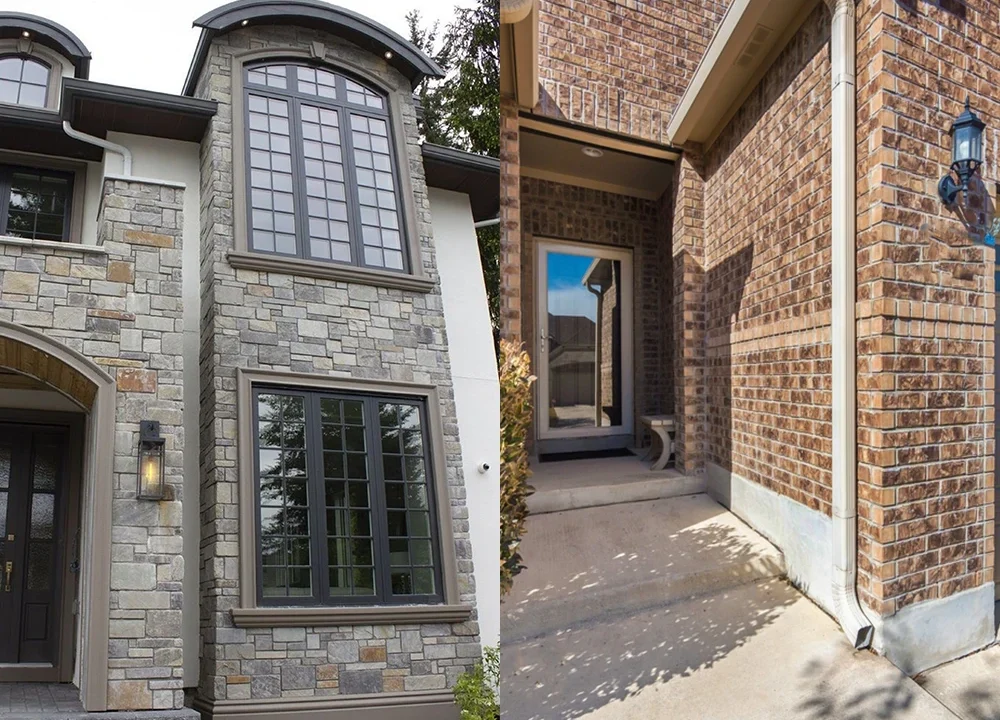
When it comes to choosing the right exterior material for your home, stone siding and brick are two of the most popular and enduring options. Both materials offer unique advantages in terms of aesthetics, durability, and value, but they also have distinct differences that might make one a better choice for your specific needs. In this article, we’ll compare stone siding and brick to help you decide which is the best fit for your home.
1. Aesthetics and Design Flexibility
Stone Siding: Stone siding offers a natural, timeless beauty that can range from rustic charm to modern elegance, depending on the type of stone used. Whether you choose natural stone, manufactured stone veneer, or faux stone, there are countless options in terms of color, texture, and pattern. Stone siding can be used to cover an entire house or as an accent feature, such as on a chimney, foundation, or entryway. The versatility of stone siding allows homeowners to create a unique and personalized exterior.
Brick: Brick is known for its classic, enduring appeal. It has been used in construction for centuries and continues to be a popular choice for its warm, traditional look. Brick is available in a variety of colors, from deep reds and browns to lighter tones like beige and gray. However, brick offers less variation in texture and shape compared to stone siding. While brick can be arranged in different patterns (such as herringbone or basketweave), the overall look tends to be more uniform.
Verdict: If you’re looking for a highly customizable and varied exterior, stone siding might be the better option. For a classic, uniform appearance, brick is a solid choice.
2. Durability and Maintenance
Stone Siding: Stone siding, particularly natural stone, is incredibly durable and can last for decades or even centuries with minimal maintenance. It is resistant to fire, insects, and rot, and it can withstand extreme weather conditions, from heavy rain to intense heat. Manufactured stone veneer is also durable, though it may not last as long as natural stone and can be susceptible to damage if not installed properly. Both natural and manufactured stone siding require little maintenance beyond occasional cleaning to remove dirt or algae.
Brick: Brick is equally durable and has been used in construction for millennia due to its strength and resilience. It is fire-resistant, termite-proof, and can handle harsh weather conditions. Like stone, brick requires minimal maintenance; however, over time, the mortar between bricks may need repointing, which involves replacing or repairing the mortar to prevent moisture infiltration. Brick can also accumulate dirt and stains, which may require periodic cleaning.
Verdict: Both stone siding and brick are extremely durable and low-maintenance. The choice between them may come down to personal preference and specific maintenance considerations, such as the potential need for mortar repairs with brick.
3. Cost Considerations
Stone Siding: The cost of stone siding varies widely depending on the type of stone. Natural stone is typically the most expensive option due to the cost of materials and the labor-intensive installation process. Manufactured stone veneer is more affordable and lighter, making it easier and less expensive to install. However, it still offers the look of natural stone at a lower price point. Faux stone siding is the most budget-friendly option but may not offer the same durability or authenticity as natural or manufactured stone.
Brick: Brick is generally less expensive than natural stone but can be more costly than manufactured stone veneer. The price of brick also depends on factors such as the type of brick, the complexity of the pattern, and the size of the home. The installation process for brick is labor-intensive, which can add to the overall cost. However, brick’s long lifespan and minimal maintenance can make it a cost-effective choice over time.
Verdict: If budget is a primary concern, manufactured stone veneer or brick might be more affordable options than natural stone. However, the long-term costs associated with maintenance and durability should also be considered.
4. Energy Efficiency
Stone Siding: Stone siding provides excellent thermal mass, meaning it can absorb heat during the day and release it at night, helping to regulate indoor temperatures. This can lead to energy savings, particularly in climates with significant temperature fluctuations. However, stone siding typically requires a good insulation layer underneath to maximize its energy efficiency.
Brick: Like stone, brick offers good thermal mass and can contribute to a home’s energy efficiency by maintaining stable indoor temperatures. Brick walls are often thicker than stone veneer installations, which can enhance their insulating properties. However, additional insulation may still be necessary, depending on the climate and the specific construction of the home.
Verdict: Both materials can contribute to energy efficiency, especially when combined with proper insulation. The difference in energy savings between brick and stone siding is generally minimal.
5. Environmental Impact
Stone Siding: Natural stone is a sustainable material that has minimal environmental impact once extracted. However, the quarrying process can be energy-intensive and environmentally disruptive. Manufactured stone veneer is made from natural aggregates and cement, which are less environmentally intensive to produce than natural stone but still have an environmental footprint. Faux stone, often made from lightweight composites, has the least environmental impact in terms of material use but may not be as durable.
Brick: Brick is made from natural clay and shale, which are abundant and sustainable resources. The production process for brick does require a significant amount of energy, particularly in the firing stage, but modern brick production is becoming more energy-efficient. Brick is also highly durable, which means it doesn’t need to be replaced as often as other materials, reducing its long-term environmental impact.
Verdict: Both materials have environmental considerations, but brick’s abundance and potential for long-term durability give it a slight edge in sustainability.
Conclusion
Choosing between stone siding and brick for your home ultimately depends on your priorities in terms of aesthetics, budget, durability, and environmental impact.
- Choose stone siding if you desire a versatile, customizable exterior with a wide range of textures and colors, and are willing to invest in either natural stone or a high-quality manufactured stone veneer.
- Choose brick if you prefer a classic, uniform look with long-lasting durability and are looking for a slightly more cost-effective option.
Both materials offer significant benefits, and either choice can enhance the beauty, value, and longevity of your home. When making your decision, consider working with a knowledgeable contractor like Grand Circle Group to ensure that your chosen material is installed professionally and will stand the test of time.


